Snow removal: site survey
Areas by use, stairs and ramps, stakes, de-icing and liquids per application and per season at your rates, and room to pile snow.
No credit card. Cancel anytime.
Feet and inches or metric: your choice. One switch on the sheet converts every measurement.
What you measure
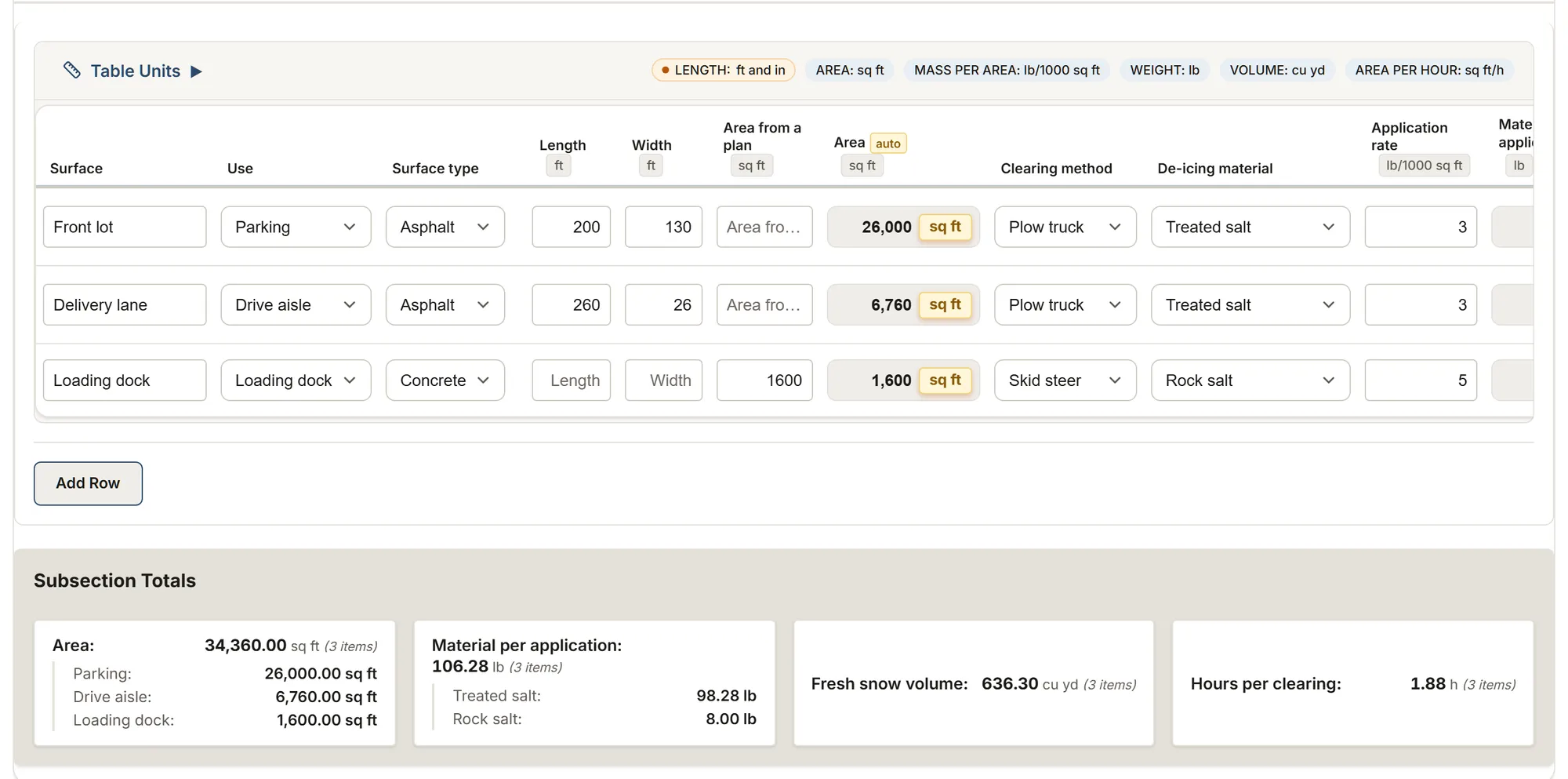
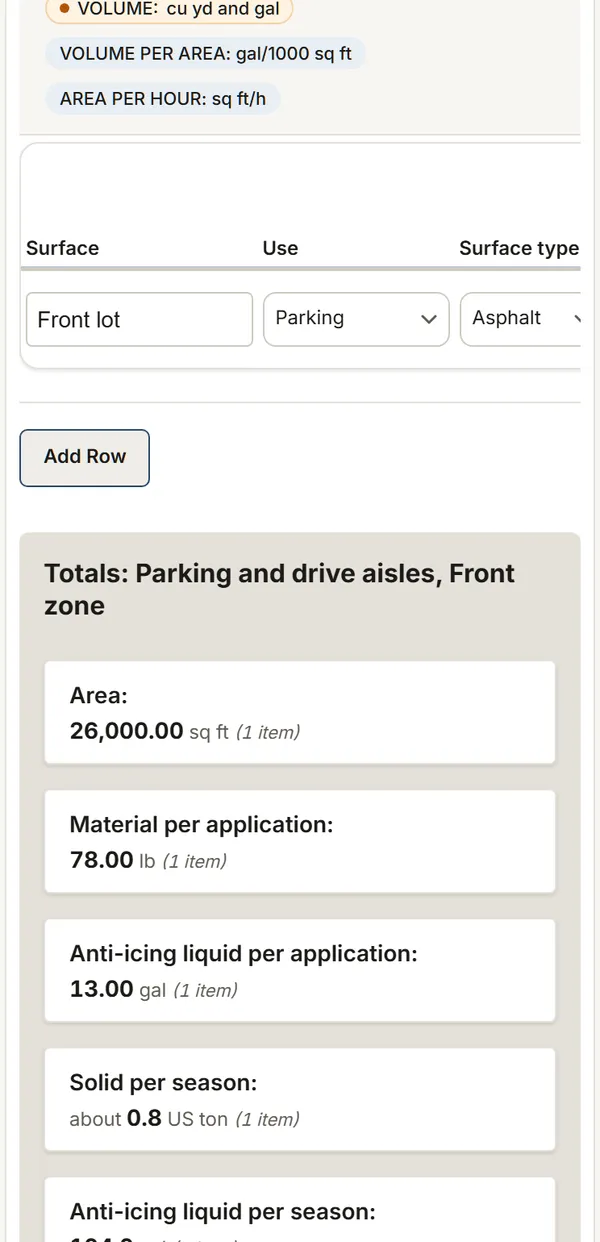
The template's tables and their columns, as the app shows them. Calculated columns fill in as you type.
Surfaces to clear
- Surface
- UseChoices: Parking Drive aisle Fire lane Loading dock Walkway Sidewalk Ramp Driveway Other
- Surface typeChoices: Asphalt Concrete Pavers Gravel Other
- Length
- Width
- Area from a plan
- Deduction
- Area calculated
- Clearing methodChoices: Plow truck Loader Skid steer Snowblower Shovel
- De-icing materialChoices: Rock salt Treated salt Abrasive (sand, grit) Salt and sand mix Liquid (note only) None
- Application rate
- Material per application calculated
- Pre-wet liquid (product)
- Pre-wet rate
- Pre-wet liquid per application calculated
- Anti-icing liquid (product)
- Anti-icing rate
- Anti-icing liquid per application calculated
- De-icing applications per season
- Anti-icing applications per season
- Solid per season calculated
- Pre-wet liquid per season calculated
- Anti-icing liquid per season calculated
- Snow depth planned
- Fresh snow volume calculated
- Production rate
- Hours per clearing calculated
- Notes (drainage, drifting, shade, damage)
Edges and marking
- ItemChoices: Curb Lawn edge Island Fence Drain Other
- Edge length
- Stake spacing
- Stakes calculated
- Notes
Obstacles and hazards
- ItemChoices: Hydrant Light pole base Bollard Speed bump Catch basin Transformer Sign Shaded or badly drained spot Other
- Obstacles
- MarkedChoices: Yes To install Not needed
- Notes
Stairs, ramps and docks
- ItemChoices: Stairs (per flight) Ramp Landing Loading dock Entrance Other
- Count
- Width
- Minutes each
- Stair and ramp hours per clearing calculated
- Notes
Snow storage zones
- Zone
- OnChoices: Grass Pavement (low side) Island Off site (hauled)
- Length
- Width
- Maximum pile height
- Storage volume calculated
- Distance to a watercourse or wetland
- Distance to a well
- Meltwater drains to
- Notes
See these tables calculate with your own measurements, no account.
Try this templateMore templates: Snow removal
Residential snow removal survey
Driveway and cars, walkways, sidewalk, steps and balconies, stakes, snow piles and contract terms, with the hours per visit and for the season.
You get: Area Material per application Stakes
About this template
Walk a site before the season: areas to clear by use, stairs and ramps, edges and obstacles to mark, de-icing per application at your own rate, and the room to pile snow.
Guide and sources
Read the guide and sources
Walk the site before the first snow. Measure each surface to clear by use, note the stairs and ramps done by hand, the edges and obstacles to mark, and where snow can be piled.
The contract terms (triggers, response time, level of service) come from the client: enter them as the client gives them.
The application rate depends on pavement temperature and the snow: it stays empty for you to enter. A published parking lot table is cited in the column's help. The fresh snow volume is plain geometry, with no packing, to compare with the volume of the storage zones.
Check your city's rules for private snow removal (permits, where snow may go, the street and the sidewalk). In Quebec, snow kept on a lot is piled away from watercourses, wetlands and wells, and snow hauled off site goes to an authorized disposal site.
Liquids and the season: on a surface spread with a solid, type the pre-wet liquid and its rate per ton of the solid (Transports Québec: 35 L/t on board, 40 L/t in the pile; MPCA: 8 to 14 gallons/ton of brine, with about 1/3 less solid): the sheet gives the liquid per application. Before a storm, the anti-icing liquid and its rate per 1,000 sq ft (MPCA: 0.3 to 0.8 gal of brine, a starting point; UConn: 0.5 to 0.75). Then your count of de-icing and anti-icing applications for a season (the ECCC and NOAA normals give the days with snowfall near the site): the sheet totals the solid in US tons per material and the liquids per product, each rounded up once.
Sources
- MPCA, parking lot manual (2015) Government
- UConn, Connecticut parking lot guide (2023) Government
- NOAA NCEI, U.S. Climate Normals 1991-2020 Government
- ASTM F3627-24 paywalled Standard
- SIMA-10-2020 (ANSI) paywalled Trade association
- TAC, salt on private roads and parking lots (2013) Trade association
- ECCC, Canadian Climate Normals 1991-2020 Government
- TAC, snow storage and disposal (2013) Trade association
- ECCC, road salts Code of Practice Government
- Smart About Salt certification Trade association
- Transports Québec, spreading guide (2019) Government
- Quebec snow, road salt and abrasives regulation (Q-2, r. 28.2) Government
- Montréal, private snow removal permit Government
Your trade isn't listed? The AI assistant builds your form.
No credit card. Cancel anytime.