The driveway or the lot measured before the sealer and the lines.
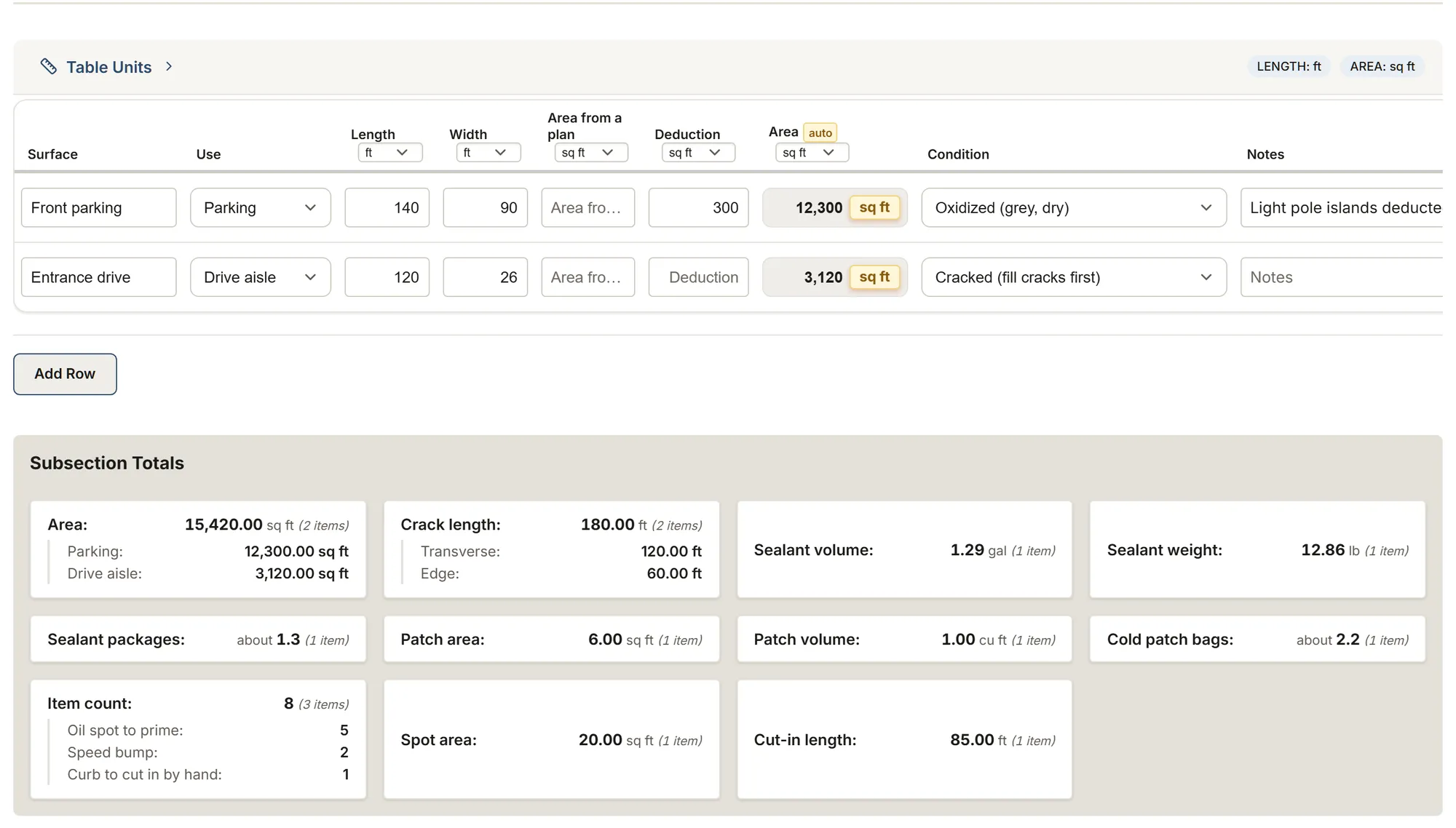
Walk the site on your phone: each zone with its surfaces, cracks, potholes and oil spots, then one row per coat of sealer. For striping, a second survey counts the stalls, lines, stencils and curbs, and works out the paint per color.
No credit card. Cancel anytime.
More templates to try: Parking lot striping: survey
What you record on site
- Each surface: its use (driveway, parking, drive aisle, loading area), its length and width or the area from the plan, less the islands, and its condition
- Cracks by type, with their length, width, depth and the treatment planned
- Potholes and failed areas to patch, their method and depth
- Oil spots to prime, drains, covers and edges to work around
- Each coat of sealer: its product, the coverage from its data sheet and the mix design (water, sand, additive)
- For striping: stalls by type, angle and status, lines by kind and color, stencils and curbs to paint
What MesuPro calculates for you
- The area of each surface and the total by use
- Crack sealant from the crack and overband volume, by weight and by package
- Hot mix in tons and cold patch in bags for the patches
- Sealer, water, sand and additive per coat, with the pails and sand bags rounded up once per product
- Line length by kind and paint per color, from the width and the wet film
- Paint for the stencils and the curbs
No coverage, mix, film or loss comes filled in: they come from the data sheet of the product you choose. The help cites several makers' figures and recommends none, and the coal tar sealer rules in Canada and several US states. The number of accessible stalls is the one your local rule asks for: you type it.
The sealcoating and striping templates
Feet, inches, square feet or metric: your choice.
Sealcoating: site survey
Areas by use and condition, cracks, potholes and patches, oil spots; sealer, water, sand and pails for each coat.
You get: Area Sealant volume Sealant weight
Parking lot striping: survey
Stalls by type and angle, lines by kind and color, stencils, curbs and wheel stops, paint per color.
You get: Line length Line paint Stencil paint
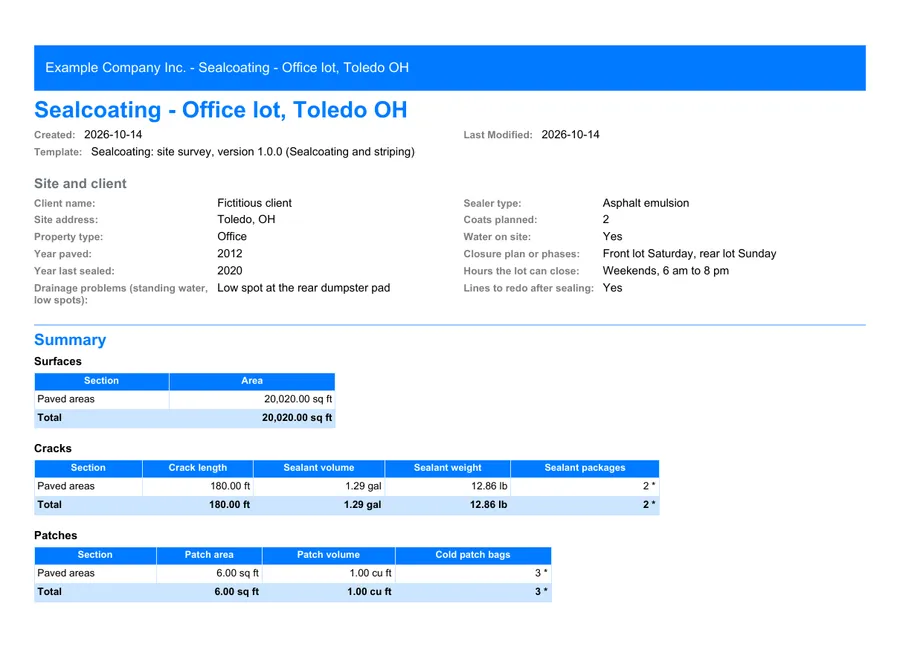
The report, ready to send
Export the survey to PDF with your photos for the client, without your crew hours, or to Excel to bring the measurements into your quote.
FAQ
Does the template pick the sealer?
No: you type the coverage, water, sand and pail size from your product's data sheet. The help cites several makers' figures (SealMaster, Neyra, Latex-ite, Henry), and recommends none.
What about coal tar sealers?
The sealer type is recorded on the survey. Minnesota, Washington, Maine, New York, Maryland, Virginia and the District of Columbia ban their sale or use, and Canada has banned their sale since December 31, 2025: the field's help cites these rules.
How many accessible stalls?
Your local rule sets it. You type the number required; the help quotes the 2010 ADA Standards table and city examples. The survey records the existing and planned stalls; it is not a review of the lot against the rules.
Several lots or several products?
Click "Add a zone": each zone opens with its tabs blank, and the sheet totals every zone. For a second sealer, click "Add a system" under Sealcoat.