Every window measured to the 1/8 in, the size for the order worked out.
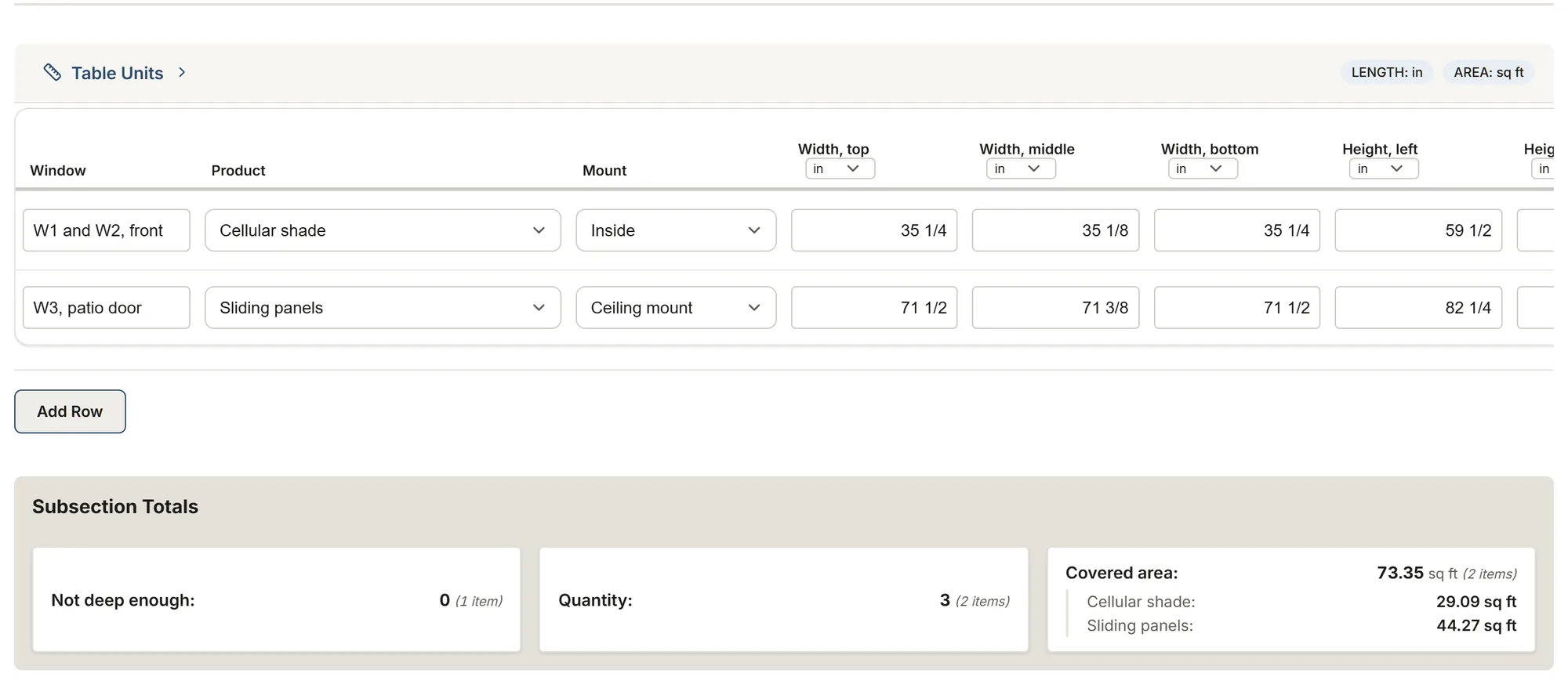
Walk the home on your phone, one room at a time: three widths and three heights per window, and MesuPro keeps the right one for the mount, adds the overlaps for an outside mount and flags the windows too shallow for the product.
No credit card. Cancel anytime.
More templates to try: Drapery workroom: fabric calculation Commercial shades: schedule by floor
What you record on site
- Each window: its mark, the product and the mount (inside, outside or ceiling)
- Three widths and three heights to the 1/8 in, typed as "35 1/8" or with the eighths keys
- The depth available, the diagonals and the obstructions: crank, latch, alarm sensor
- The control, its side and the motor's power supply
- Curtains: the glass, the stackback, the hardware, the length and the adjustment
- The client, whether children live there, the light wanted in each room and the access
What MesuPro calculates for you
- The width for the order: the narrowest inside, the widest plus the overlaps outside
- The height for the order: the longest or the shortest, as your maker asks
- The windows not deep enough for the product chosen
- How far out of square each window is, from its diagonals
- The covered area per product, for the whole home
- Each curtain's face width and finished length
- For the workroom: the finished width, the widths, the cut to the repeat and the yards of each fabric and lining
- For commercial jobs: the shades of each control group, the area of each fabric and the shades wider than the roll
Nothing comes filled in: overlaps, room above and minimum depths come from your maker's form, and the sheet never takes the factory's deduction. The hints cite several makers' measuring guides and Canada's Corded Window Coverings Regulations.
Window coverings templates
Inches and fractions, or metric: your choice.
Window coverings: window measure
Windows room by room: three widths and heights, mount, depth, diagonals, control, the size for the order and curtains.
You get: Covered area
Drapery workroom: fabric calculation
For the drapery workroom: finished width, fullness, widths, the cut to the repeat and the yards of each fabric and lining.
You get: Widths Fabric needed
Commercial shades: schedule by floor
For commercial jobs: shades by floor and zone, pocket or fascia, fabric and openness, control groups, cubicle curtains.
You get: Fabric area
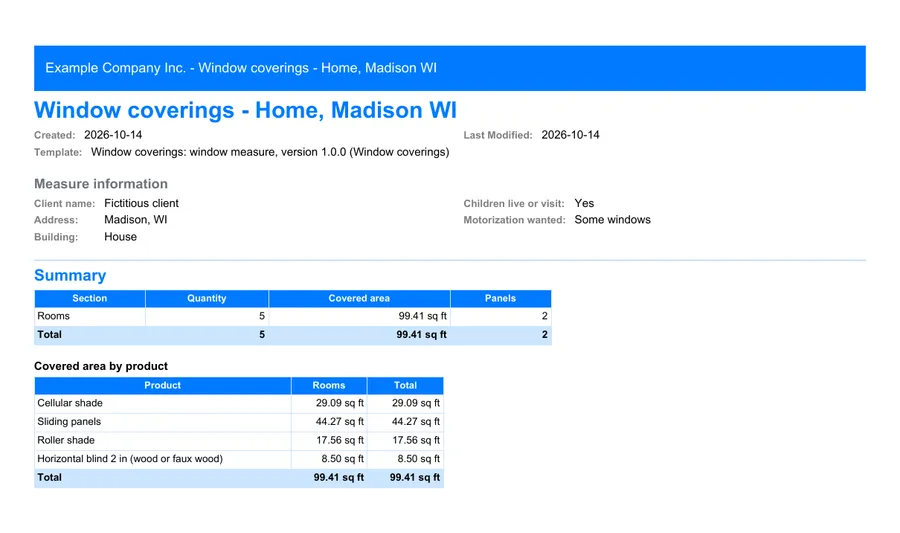
The report, ready to send
Export a PDF for the client with the size kept for each window, without your readings, the calculation steps or your internal notes, or for internal use with every column. The Excel export carries every measurement.
FAQ
Does the sheet take the inside mount deduction?
No. Every maker's guide we read says the same: measure exactly, the factory takes the deduction. The sheet keeps the narrowest reading for an inside mount and takes nothing off.
Which height: the longest or the shortest?
The one your maker asks for, chosen on each row: the longest for most shades and horizontal blinds, the shortest for vertical blinds, sliding panels and shutters.
Can I type fractions?
Yes. Type "35 1/8" or "35-1/8", or use the eighths keys under the cell. Measurements show to the 1/8 in, on the page and in the PDF.
Several rooms?
Click "Add a room" for each room: it opens with its tables blank, and the covered area adds up per product for the whole home.
An office building, floor by floor?
Yes. The commercial template gives each floor its own section; click "Add a zone" for each zone: it opens with its tables blank, and the sheet counts the shades of each control group.
What about cords, with children around?
The sheet records whether children live in or visit the home, and the control chosen for each window. In Canada, the Corded Window Coverings Regulations keep a reachable cord to 22 cm and a loop to 44 cm.