Fence survey
Runs by style, posts, sections, rails and pickets, gates, concrete bags, the old fence and a chain link take-off.
No credit card. Cancel anytime.
Feet and inches or metric: your choice. One switch on the sheet converts every measurement.
What you measure
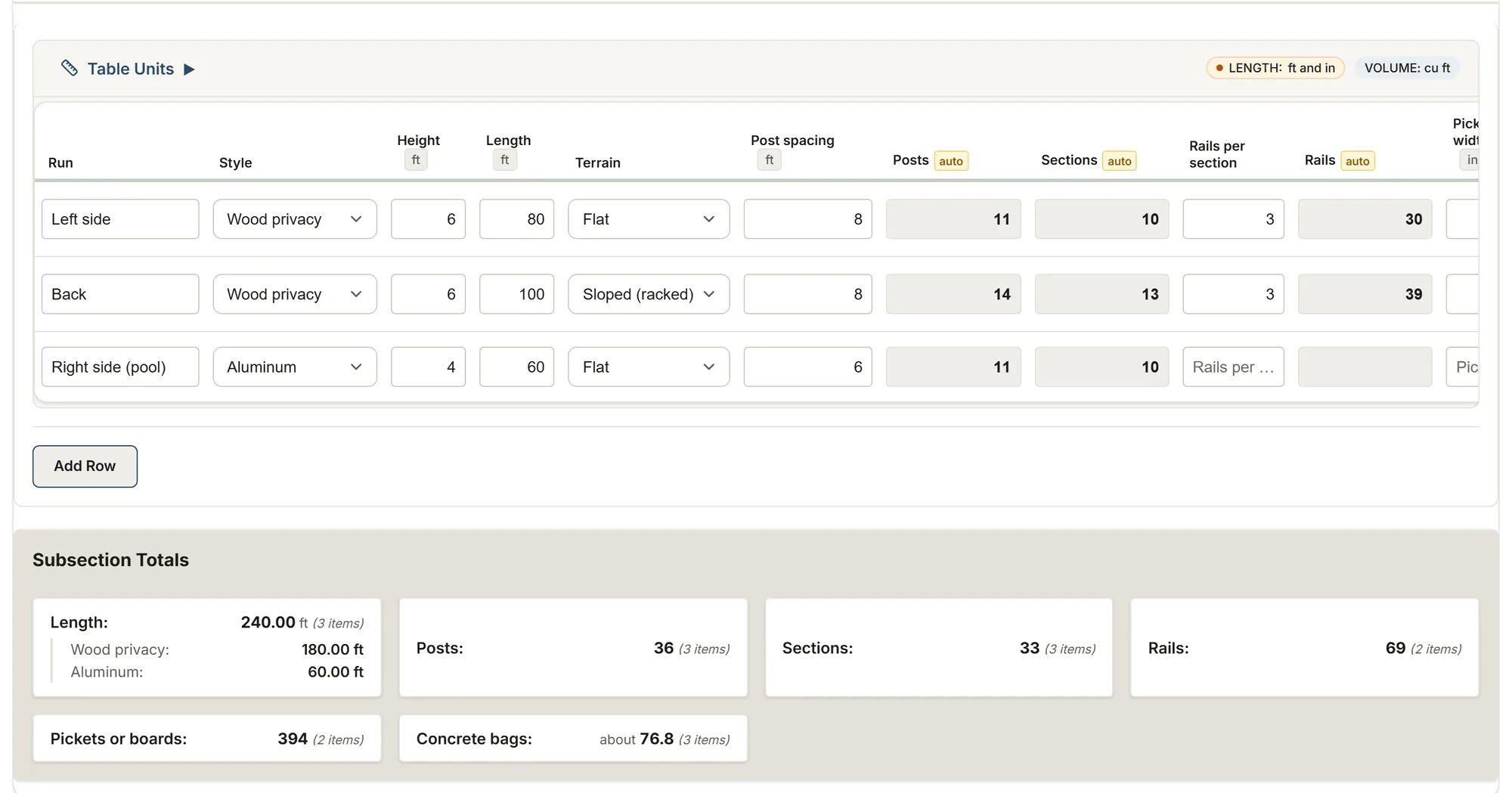
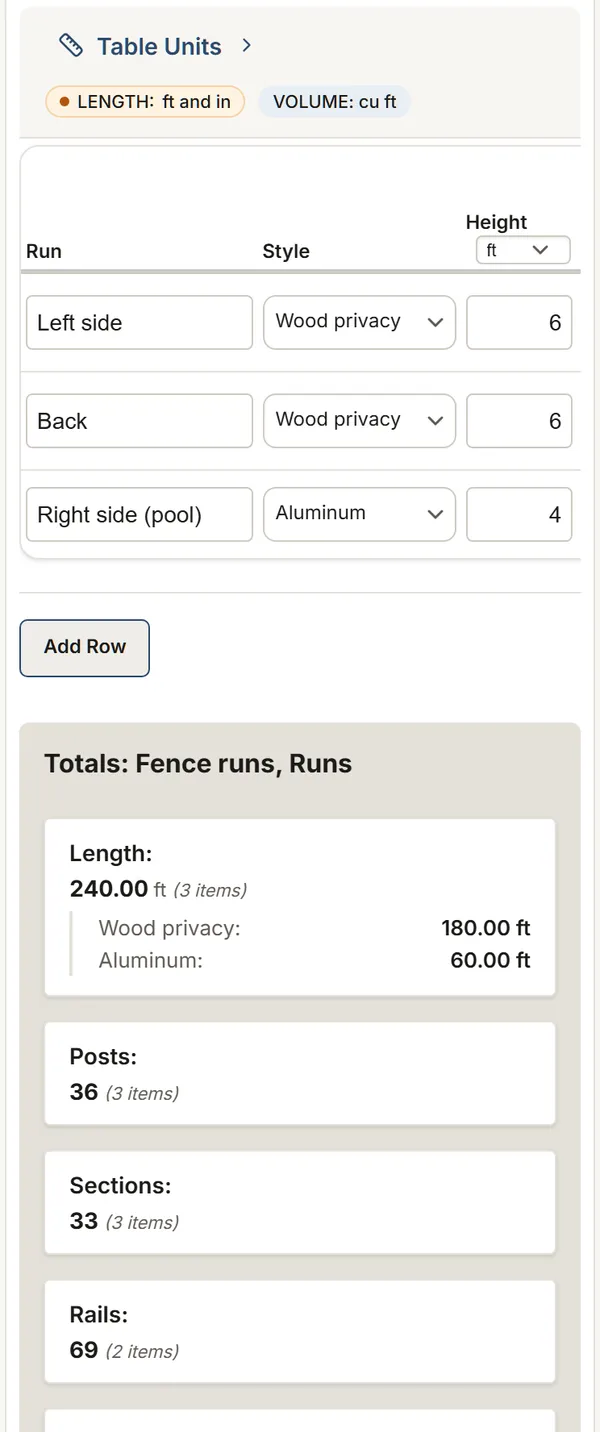
The template's tables and their columns, as the app shows them. Calculated columns fill in as you type.
Fence runs
- Run
- StyleChoices: Wood privacy Wood picket Vinyl Chain link Aluminum Ornamental iron Composite Other
- Height
- Length
- TerrainChoices: Flat Sloped (racked) Stepped
- Post spacing
- Posts calculated
- Sections calculated
- Rails per section
- Rails calculated
- Picket or board width
- Gap between pickets
- Pickets or boards calculated
- Hole diameter
- Post width
- Concrete depth in the hole
- Concrete per hole calculated
- Concrete per bag
- Concrete bags calculated
- Notes (rock, roots, slope, damage)
Gates
- GateChoices: Walk gate Double drive gate Sliding gate Other
- Width
- Height
- Allowance
- Gate frame width calculated
- Gates
- Gate posts
- HardwareChoices: Self-closing and self-latching Standard latch Lockable
- OpensChoices: Outward Inward Slides
- Notes
Old fence to remove
- Old fenceChoices: Wood Chain link Vinyl Metal Other
- Length to remove
- Haul awayChoices: Yes No
- Notes
Chain link materials
- Stretch
- Fabric
- Fabric height
- Stretch length
- Line post spacing
- Line posts calculated
- Terminal posts
- Top rail length
- Top rail pieces calculated
- Roll length
- Fabric rolls calculated
- Tension bars calculated
- Tension bar length calculated
- Bands per bar
- Tension bands calculated
- Rails
- Rail ends and brace bands calculated
- Tie spacing on posts
- Tie spacing on rails
- Fabric ties calculated
- Post caps calculated
- Notes
See these tables calculate with your own measurements, no account.
Try this templateMore templates: Fencing
Fence repair: survey
Repairs: stretches, each post with its condition and the fix chosen, boards, rails and chain link to replace, sagging gates.
About this template
Walk a fence job: runs by style and length, posts, sections, rails and pickets from your spacing, gates, concrete bags for the posts, and the old fence to remove.
Guide and sources
Read the guide and sources
Walk the property with the client. Record each fence run on its own row: its style, height, length and terrain. Posts, sections, rails and pickets are counted from the spacing and sizes you use.
For concrete, enter the hole diameter, the post width and the depth filled with concrete, then the yield printed on the bag. Gate posts are counted in the gates table: add them to the run posts when ordering.
Before digging, request the utility locate (811 in the US). For a pool enclosure, the pool barrier rules (ISPSC 2024, 305, as adopted where you work) are cited in the help; also check your city's fence bylaw.
Chain link is bought as a take-off: one row per straight stretch between two terminal posts, with the line post spacing you use (Master Halco: 8 ft, at most 10 ft) and your supplier's rail and roll lengths. The sheet counts the line posts, the rail pieces and fabric rolls (added up per product, rounded up once), two tension bars per stretch and their length, the bands, rail ends, ties and caps. For gates, type the maker's allowance to get the frame to order. Check the city's height limit first (Montréal: 0.90 m in front, 2 m at the back).
Sources
- Quikrete 1004 data sheet Manufacturer data
- Midwest Air Tech, double gate Manufacturer data
- ISPSC 2024, 305 Code
- Master Halco, chain link spec Manufacturer data
- 811 Before You Dig Trade association
- Regina, chain link spec Government
- Quebec residential pool safety regulation (S-3.1.02, r. 1) Government
- Montréal, fence heights Government
- RBQ, travaux d'excavation Government
Your trade isn't listed? The AI assistant builds your form.
No credit card. Cancel anytime.