Concrete resurfacing: survey
Surfaces to resurface, condition and finish, coats and bags from the coverage per bag; repairs and their bags, cracks and joints to keep.
No credit card. Cancel anytime.
Feet and inches or metric: your choice. One switch on the sheet converts every measurement.
What you measure
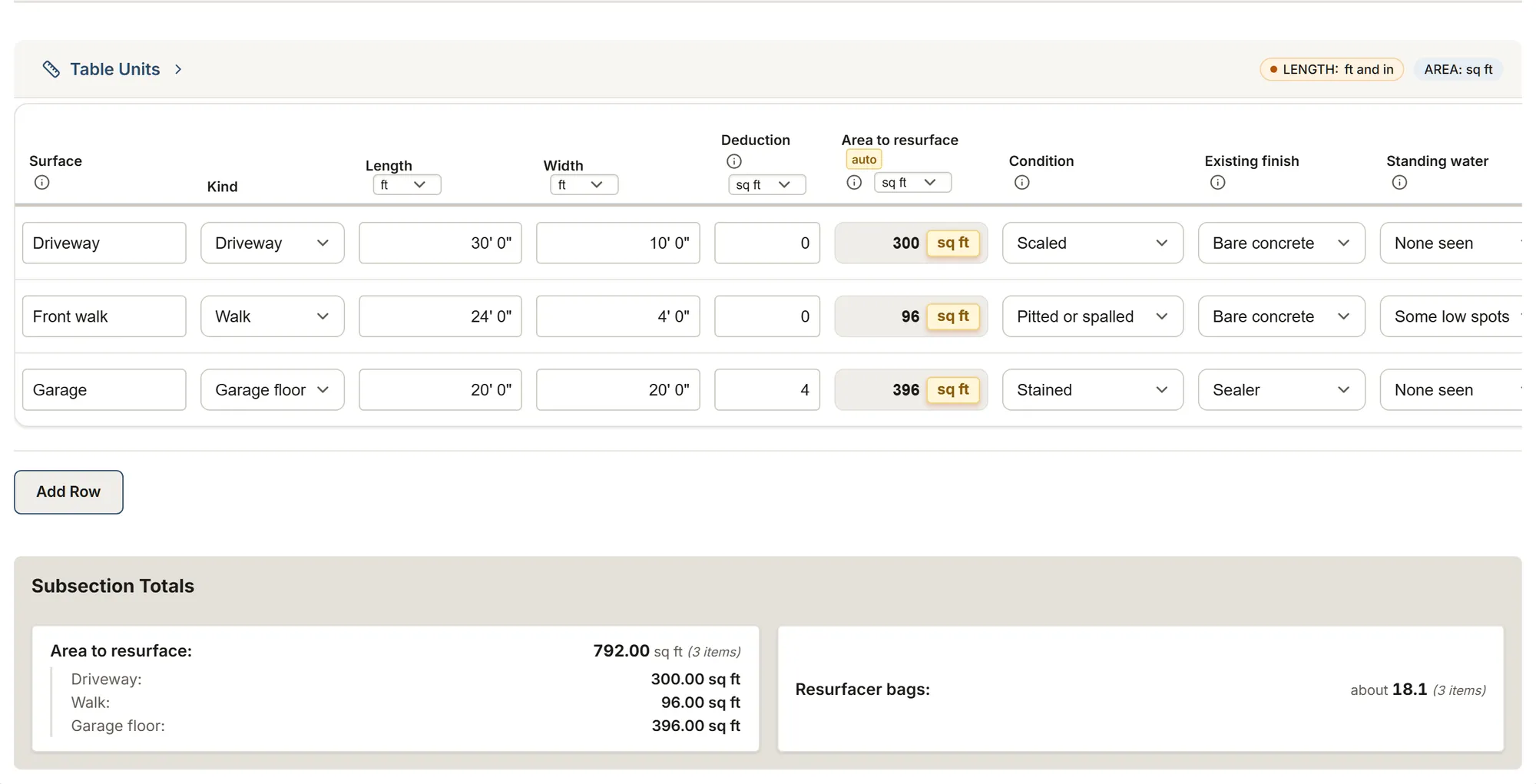
The template's tables and their columns, as the app shows them. Calculated columns fill in as you type.
Surfaces to resurface
- Surface
- KindChoices: Driveway Walk Patio Garage floor Pool deck Other
- Length
- Width
- Deduction
- Area to resurface calculated
- ConditionChoices: Worn Scaled Pitted or spalled Stained Cracked Settled or heaved Broken through
- Existing finishChoices: Bare concrete Sealer Paint or coating Not known
- Standing waterChoices: None seen Some low spots Not checked
- Coat thickness
- Coats
- Coverage per bag
- Waste
- Resurfacer bags calculated
- Notes
Repairs before resurfacing
- Where
- RepairChoices: Spall or pothole Broken edge Low spot Other
- Patch length
- Patch width
- Patch depth
- Patch volume calculated
- Bag yield
- Repair bags calculated
- Notes
Cracks
- Crack
- Crack length
- Crack width
- MovingChoices: Not moving Moving or growing Not known
- PlanChoices: Fill with the resurfacer Repair mortar Leave and note To decide
- Notes
Joints to keep
- Joint
- KindChoices: Control joint Expansion joint Edge against the house or a wall
- Joint length
- PlanChoices: Protect with tape Raise to the new height Cut the groove again To decide
- Notes
About this template
Surfaces to resurface with their area, condition and finish, coats and resurfacer bags; repairs and their bags, cracks and joints to keep.
Guide and sources
The visit before a thin cement resurfacer goes over existing concrete, on one sheet. The surfaces: one row per driveway, walk, patio or garage floor, its length and width less what is left out (the area adds up by kind), its condition, its existing finish and any standing water, then the coat thickness, the coats, the coverage per bag read on the bag and your waste: the bags round up at the section total.
Before resurfacing: the repairs, one row per spall, broken edge or low spot, with its size (the volume adds up by repair) and the bag yield of the repair product (the bags round up at the section total); the cracks with their length, width and movement; the joints to keep, their kind and length, and what you plan for each. The epoxy floor survey coats interior floors; the flatwork survey pours new slabs.
The hints cite without applying: QUIKRETE's data sheet for its Concrete Resurfacer (1131) and SAKRETE's for Flo-Coat on coverage, coats, preparation, joints and weather, QUIKRETE 1101 on a concrete mix's yield. No verdict on the slab: the makers write their resurfacers for sound concrete, and a settled, heaved or broken slab is recorded for you or a professional to decide. No price: the sheet is the measure.
Sources
- QUIKRETE 1131 data sheet Manufacturer data
- Quikrete 1101 data sheet Manufacturer data
- SAKRETE Flo-Coat (French) Manufacturer data
More templates: Epoxy floors
Epoxy floor survey
Floor areas, joints and cracks, moisture tests, cove base, doors and drains; each coat's coverage, liquid, kits, flakes and quartz.
You get: Floor area Filler Filler packages
Polished concrete survey
Ground and polished concrete: exposure class, appearance level, steps, hours, densifier, guard, DOI, gloss and haze readings.
You get: Floor to polish
Your trade isn't listed? The AI assistant builds your form.
Start your 14-day free trialNo credit card. Cancel anytime.