Drapery workroom: fabric calculation
For the drapery workroom: finished width, fullness, widths, the cut to the repeat and the yards of each fabric and lining.
No credit card. Cancel anytime.
Feet and inches or metric: your choice. One switch on the sheet converts every measurement.
What you measure
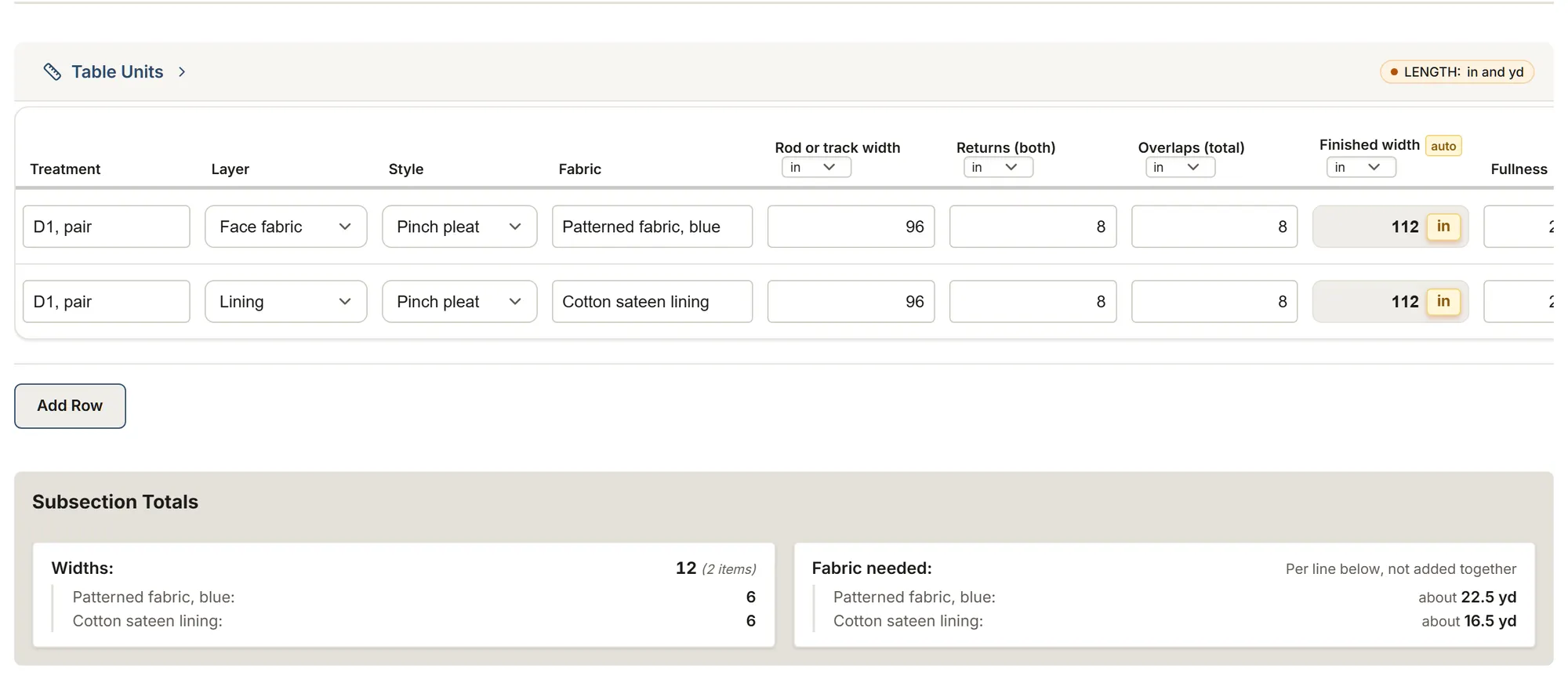
The template's tables and their columns, as the app shows them. Calculated columns fill in as you type.
Fabric calculation
- Treatment
- LayerChoices: Face fabric Lining Blackout lining Interlining Sheer
- StyleChoices: Pinch pleat Goblet pleat Inverted pleat Ripple fold Grommet Rod pocket Tab top Flat panel
- Fabric
- Rod or track width
- Returns (both)
- Overlaps (total)
- Finished width calculated
- Fullness
- Side hems (total)
- Usable fabric width
- Widths calculated
- Finished length
- Header allowance
- Hem allowance
- Cut length calculated
- Pattern repeat
- Cut to the repeat calculated
- Fabric needed calculated
- Notes
About this template
From finished sizes to fabric, treatment by treatment: the finished width with returns and overlaps, the fullness, the widths, the cut length with header, hem and pattern repeat, and the yards of each fabric and lining.
Guide and sources
Give each room its own section ("Add a room") and work each treatment from its finished sizes: the rod or track width, the returns and the overlaps give the finished width; the fullness for the heading gives how much fabric goes across. Type the face fabric, the lining, the interlining and the sheer on rows of their own, with the same mark, each with its own fabric width and allowances: they are calculated separately.
The fullness, the allowances, the returns and the overlaps are yours: the hints show what workroom educators and track makers publish. For ripple fold, the track maker's chart sets the snaps, the tape and the stackback: the fullness here only estimates the fabric.
Widths are rounded up for each treatment. Each cut is rounded up to whole pattern repeats so every width matches; some workrooms instead cut the first panel at its length and add one repeat to each other panel. Fabric is totalled for each fabric and rounded up once, where you buy it; two fabrics are never added together.
Fabrics in some buildings need a flame rating: in Canada, CAN/ULC-S109 for drapes in assembly occupancies, lobbies, exits and large open floors, and the hospital textile standard for window drapes and cubicle curtains in care settings. Record the rating the job asks for and ask the supplier for the fabric's certificate: the sheet records it, it certifies nothing.
Sources
- The Shade Store, drapery measuring Manufacturer data
- Drapery Rods Direct, pinch pleat Manufacturer data
- Singer, draperies (1960) Rule of thumb
- Pam Damour, The Perfect Panel Rule of thumb
- Kirsch, ripplefold fabrication manual Manufacturer data
- Fabric Depot, yardage charts Rule of thumb
- Addicted 2 Decorating, yardage with a repeat Rule of thumb
- NFC 2020, 2.3.2 Code
- CAN/ULC-S109 paywalled Standard
- Quebec Safety Code, chapter VIII Government
More templates: Window coverings
Window coverings: window measure
Windows room by room: three widths and heights, mount, depth, diagonals, control, the size for the order and curtains.
You get: Covered area
Commercial shades: schedule by floor
For commercial jobs: shades by floor and zone, pocket or fascia, fabric and openness, control groups, cubicle curtains.
You get: Fabric area
Your trade isn't listed? The AI assistant builds your form.
Start your 14-day free trialNo credit card. Cancel anytime.